Spend a year developing yourself — discover your deeper purpose and share your life and gifts in a thriving sustainable community with Camphill!Camphill is an international movement dedicated to creating sustainable, inclusive communities that recognize and develop the unique gifts and capacities of each individual. Over the past 80 years, Camphill has grown to include over 100 communities worldwide. Each community is uniquely designed to meet the needs of children and adults with intellectual and developmental disabilities. A beautiful life for everyone in Camphill is achieved through nurturing community, the land, and artistic expression. In Camphill, Volunteers live in extended-family style homes and work alongside people with intellectual and developmental disabilities to create a neurodiverse community where everyone has a place to contribute and receive. A Camphill experience provides an opportunity for you to discover and grow your full potential as you develop lifelong friendships with interesting people from many different countries, backgrounds, and abilities. You can build new skills and creative capacities: biodynamic farming and gardening, holistic special education and therapeutic practices, and artisan crafts from bookbinding and baking to woodworking and weaving. No matter what you do, you are given a life changing opportunity with incredible personal growth potential. |
| Camphill Communities |
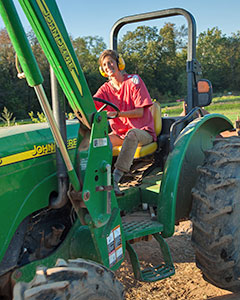
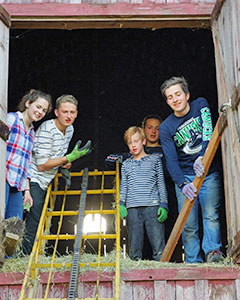
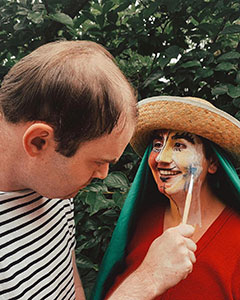
When you volunteer with Camphill, you experience a different way to be in the world. You engage your passion for helping people and the earth, for creating beauty and peace. You join a whole community striving together to cultivate a life that is joyful, creative, inclusive, and sustainable. You become your brightest, most vivid self. Make Camphill part of your story. Altogether, Camphill communities in North America steward over 3,000 acres of land, providing opportunities for sustainable agricultural, horticultural, and forestry work as a contribution to a sustainable world ecology. In each Camphill community, whether a children's village, a community for young adults finding their way into adult life, or communities that provide opportunities for adults, people live together in vibrant supportive household settings. Members of the house community share in the daily life and tasks of the house, engage in work or school, and explore work on the land or in one of the many artisan craft studios. Celebration has a central place in the life of the community: through arts, festivals and honoring special events and milestones in people's lives. Care for the earth with the help of biodynamic agriculture—an approach to sustainable agriculture that attempts to revitalize the soil, plants and animal life—is highly valued and considered an essential component to the well-being of people and the community. Camphill volunteers grow faster than they imagined possible, build deep, lasting relationships, and develop practical and creative skills that open doors for the rest of their lives.
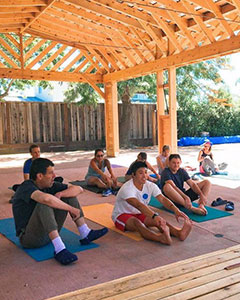
Located near Monterey Bay, Camphill Communities California is a residential care community of about 50 adults, 19 of whom have developmental disabilities. Their vision of community living involves relationships of mutual respect, ongoing education, meaningful work and natural circles of support. Volunteer opportunities are available for both long and short-term commitments (a minimum of 12 months). Located on six acres of land near Santa Cruz, the community is engaged in biodynamic gardening and cooking wholesome meals, an active cultural and artistic life, training in social therapy and healing arts, celebrating seasonal festivals together, and connecting with the larger network of providers in the field of developmental disability in the Northern California Bay Area.
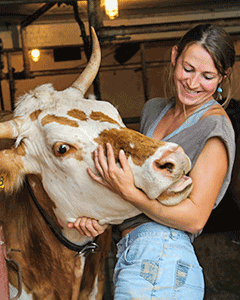
Camphill Village Minnesota is an intentional community of approximately 45 people, including adults with disabilities. The Village is nestled among 500 acres of gently rolling hills, sparkling lakes and waterways in the beautiful Heartland of America, about two hours west of the city of Minneapolis. The life, work, and celebrations of the community are based on the strong belief that every individual, regardless of ability, is an independent being, worthy of recognition, respect, and honor. The community has a strong agricultural component with biodynamic farming and gardening, a beef herd, chickens, and a very small milk herd. The craft shops include a bakery, weavery, woodworking shop, an herb shop, and a food processing kitchen. All members of the community are cared for within the context of healthy home environments and an active village life.
Plowshare Farm, nestled among the lakes and forested mountains of southern New Hampshire, is a community where adults with a wide range of abilities and capabilities live and work together to create a genuinely inclusive neighborhood of the broader community. Plowshare runs a biodynamic farm, bakery, woodshop, candle-making studio, and a vocational training center for people with varying capabilities who join the community during the daytime. At Plowshare, the line between caregiver and care receiver is blurred through the understanding that everyone has something to learn from the other and that caring for someone or something else is often a very fine path for self-development.
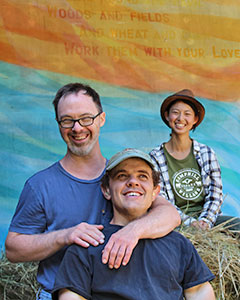
Camphill Village Copake is a unique therapeutic residential community where dedicated live-in volunteers and people with developmental disabilities share a full life together. Located in rural Columbia County, 100 miles north of New York City, the Village comprises 600 acres of wooded hills, gardens and pastures. Villagers (adults with disabilities), live-in volunteers (and their children) live together in extended family households and work together in a variety of artisan craft studios and work areas. Crafts include candle making, stained glass, bookbinding, weaving, and woodworking. Land work includes a biodynamic dairy farm, vegetable gardens, a Healing Plant garden and workshop, and Turtle Tree Seed biodynamic seed workshop. The Village also has a medical care center, culture and arts center, bakery, café and gift shop.
Camphill Ghent is a vibrant retirement community and the only assisted living home in New York State that integrates senior residents with and without developmental disabilities together. They offer a meaningful quality of life and a rich, active social program designed to support residents in maintaining their independence and joy of living. Located on 110 beautiful acres in upstate New York, the campus is in a prime location, just minutes from the quaint village of Chatham and close to the expansive cultural life of the Hudson Valley, Berkshires and Capital region. Volunteers are provided with either a studio or one-bedroom apartment and access to shared amenities with other coworkers. They are also provided trainings to become certified as NY State home health aides.
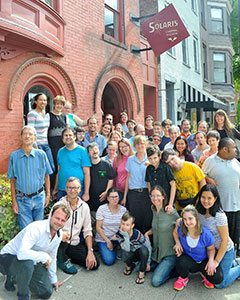
Camphill Hudson is dedicated to creating community with people of all abilities in the city of Hudson. Camphill Hudson is the smallest Camphill community, operating two life-sharing homes with five adults with developmental disabilities. They also run Solaris, a Camphill Center for the Social Arts in the heart of downtown Hudson, and just two short blocks from the Camphill Hudson homes. In Camphill Hudson they recognize the wholeness at the core of each individual and value every individual's ability, right and responsibility to make a meaningful contribution to their community. Their goal is to build community with people of all ages, races, abilities, classes and creed. They work with local residents, non-profit organizations, and businesses to support individuals in discovering their unique ability to contribute to their community.
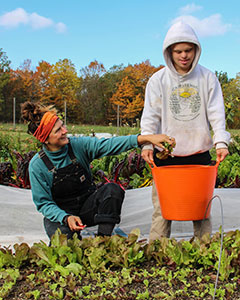
Triform Camphill Community, just outside Hudson, New York, is a residential community for young adults with developmental disabilities. It includes a dynamic mix of over 100 people spanning many generations, cultures and ranges of ability. Forty young adults with social, mental, physical and emotional disabilities live and work side-by-side with full-time volunteer resident staff and the staff's families on a 420-acre biodynamic/organic farm. Triform offers a model of care where young people with Autism, Down syndrome, and other developmental and neurological disabilities participate in dignified, purposeful work, share in warm, supportive relationships and make meaningful contributions to the well-being of everyone in the community. Triform is changing the way we understand and appreciate the capabilities of people with special needs.
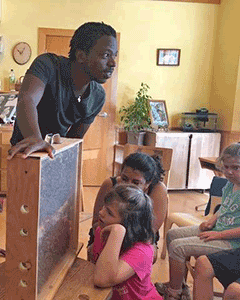
The Camphill School was founded upon the idea that the school community would not only become a joyful village for children but a place that nurtured childhood itself. This ideal remains the core of everything they do and guides how they approach development and special education. It's also the only Waldorf School in the United States that solely serves children with special needs. Their two beautiful campuses, Beaver Run and Beaver Farm, together have 220 acres of forests, flower fields, pastures, streams, and colorful buildings. And they have cows, horses, goats, pigs, sheep, and chickens. They offer fulfilling opportunities for anyone interested in education, psychology, the arts, medicine, therapies like SLP, OT, and PT, and organic farming and gardening. Life at Camphill School provides a rich, warm tapestry of nature, music, art, community, and growth opportunities for students and volunteers alike.
Camphill Village Kimberton Hills is a life-sharing community striving to restore vitality to our ecosystems and to societal structures. Adults who have developmental disabilities and volunteers form a supportive community based on shared responsibilities and caring. Volunteers live and work in the village community, serving in family households, craft workshops (bakery, weavery, fiber workshop, pottery workshop), land and building maintenance work, organic gardening and farming. The village fosters a strong cultural life of festivals, music, and art. It is located one hour west of Philadelphia and is near The Camphill School.
Located on a beautiful 150-acre farm, Heartbeet is a young and vital lifesharing community that includes adults with disabilities, live-in volunteers and their families. Everyone lives and works together in four extended family households, forming a mutually supportive environment that enables each individual to discover and develop their unique abilities and potential. The work areas in the community includes organic/biodynamic agriculture operations (farm, vegetable garden, and estate), a weavery, woodworking shop and felting and paper making studios. The spiritual and cultural life of the community is strongly connected to the seasons and is celebrated through arts, festivals and honoring special events and milestones in people's lives.
Nestled among the ancient trees of the Cowichan Valley's temperate rainforests, Glenora Farm enjoys the many gifts of Vancouver Island's culture and scenic mountain and ocean landscape. The community includes adults with and without disabilities and together they operate a biodynamic farm and vegetable garden and several artisan craft studios, as well as offering a variety of artistic activities. In their daily life, they strive to uphold the ideals of Camphill, in which each contributes what he or she is able to, and receives in turn what he or she needs, regardless of whether they are a companion or volunteer.
The Cascadia Society is a life-sharing community that includes adults with special needs. Cultural, artistic and therapeutic experiences are provided through residential home care and day activities within the urban setting of Vancouver's North Shore. The Cascadia Society is dedicated to bringing healing to human beings and to the earth. Their primary task is to allow the potential for each person to unfold and be in harmonious relationship with the environment. |
|||
| Working in Camphill |
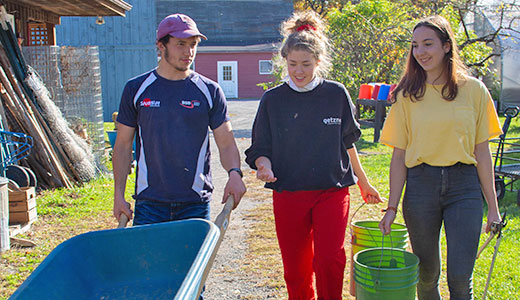
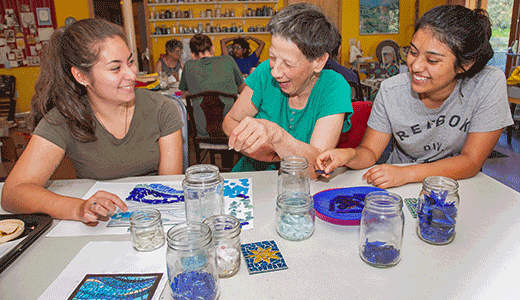
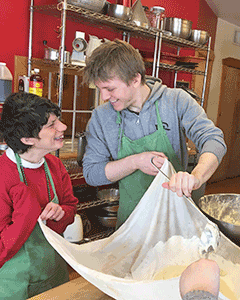
Live-in Volunteers often join Camphill after graduation, their direction still unclear. Or they've entered the working world but haven't found satisfaction. Some come for a Gap Year they've planned for all along. In as little as a year, Camphill volunteers are transformed by new clarity, purpose, and self-assurance. Living and working in Camphill is more than a job, it is an attitude to life, the heart of which is relationship. Volunteers joining a Camphill community can participate in a variety of experiences that may include: • Supporting individuals with disabilities in their daily activities at home, classroom, or at work on the farm, gardens, or in one of the various craft workshops, such as weaving, pottery, stained glass, woodworking, textiles, candle-making, bookbinding or the bakery. With the guidance of experienced mentors, you'll progress along your path of self-development, challenging yourself to expand your limits and discover all that lives in you. |
|||
| Perks & Rewards |
Living and working together, building relationships with people of all ages and abilities, as well as limitations, is both challenging and rewarding. Becoming involved in the ongoing process of community building, being part of solving the challenges that arise, provides many opportunities for learning and growth. Volunteers who choose to join a community for the short or longer term do not receive a salary in the usual sense. The focus of the work is on the benefit it can generate for individuals and the environment in both tangible and intangible ways. Each Camphill community ensures that every volunteer's basic living needs are covered. This means you receive a monthly stipend, college loan support, a private room in a beautiful environment, wholesome, mostly organic meals, medical insurance (after at least three months of stay), vacation time, and other essentials—from toiletries to use of community cars. Long-term volunteers may have access to Waldorf education for their children if the community is located near a Waldorf school. Every community also has a range of ongoing informal education workshops and courses that focus on developing skills and knowledge related to Camphill work as well as personal enrichment.
|
|||
| College Loan Support Program |
For as long as you are a volunteer, Camphill will help you with your monthly loan payments. Your college debt shouldn't keep you from enjoying the life-changing benefits of a volunteer service year. Campbell has created the College Loan Support Program to make life a bit easier for volunteers with college debt. When you apply to a Camphill community, let them know about your college loans. When you accept a position, Camphill will get you enrolled in this special program so your payments get made. On time. By Camphill. An eligible applicant is someone who:
|
|||
| Connections |
Unpause Your Life. A one minute peak into Camphill life. Begin to master new skills and carry them forward into your future. Biodynamic farming. Artisan baking. Woodworking. Leadership and cooperative collaboration. Mindfulness. Through a mix of structured training and hands-on practice under the guidance of mentors, you dive right in, and by the end of your year, you're not only comfortable with them, but you’re also leading others in learning.
Camphill Association of North America
|
|||
| Navigation | 
|
 Learn more about the
  Camphill Communities California


 Camphill Village Minnesota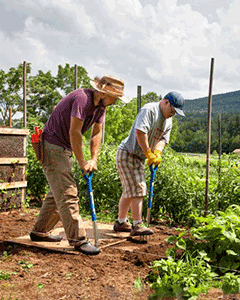
 Camphill Village Copake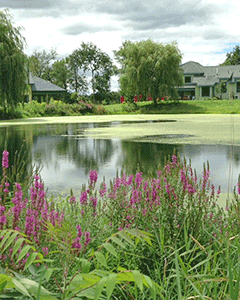
 Camphill Hudson
 Triform Camphill Community
 The Camphill School
 Camphill Village Kimberton Hills
 Heartbeet Lifesharing
 Glenora Farm
 The Cascadia Society